Monday, March 13, 2023

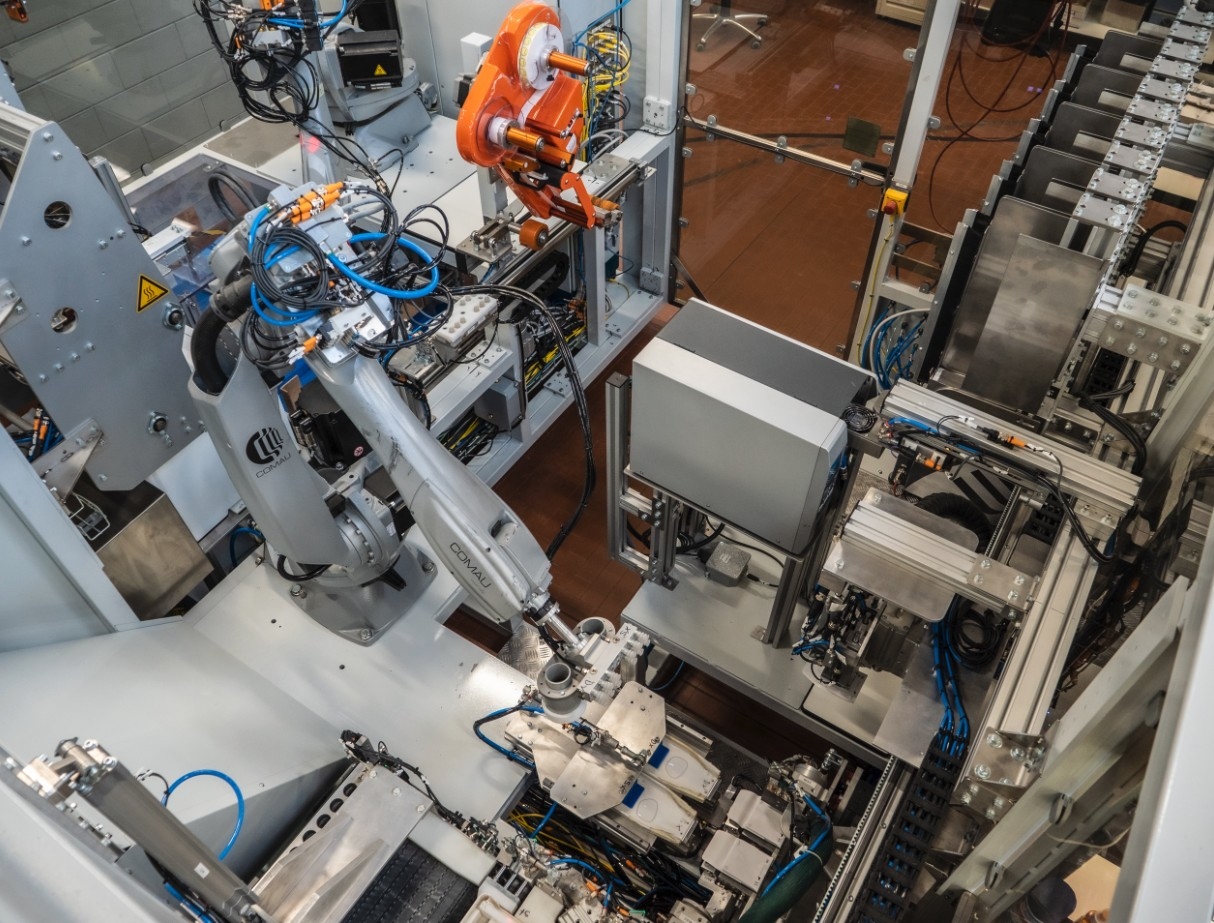
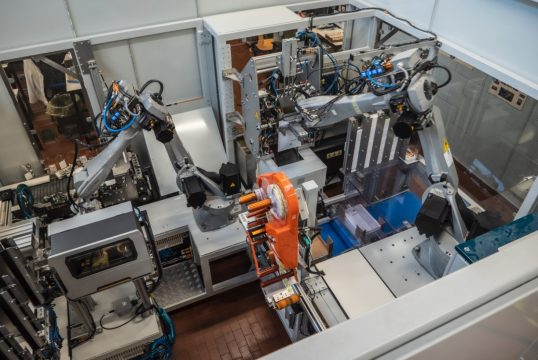
Macchina di avvolgimento film per celle Li rettangolari - Wrapping prismatic cell lithium battery for automotive machine

Siscodata, leader nella supply chain globale del settore automotive e nella produzione ad alto valore, ha scelto COMAU/ABB in qualità di fornitore di robot mobili autonomi e il binomio COMAU/FANUC per i robot collaborativi (cobot), allo scopo di evolvere i propri processi produttivi e di logistica interna attraverso l’automazione, creando un ambiente dove operatori e macchine lavorano in armonia e raggiungendo al contempo nuovi obiettivi di digitalizzazione e sostenibilità.

Attiva nel campo FOOD - GDO (grande distribuzione e supermarket), Siscodata è ora entrata nel campo automotive elettrificazione per la parte di avvolgimento delle celle prismatiche, trasmigrando le sue tecnologie ed il know how su questo campo in rapida espansione.

La nuova serie di macchine prodotta per importanti gruppi industriali del campo auto è rivolta principalmente al packaging ed al l'avvolgimento in film delle celle prismatiche. 

Le celle al litio, prima di essere messe in batteria per creare il gruppo da inserire nell'auto elettrica, devono essere ricoperte di film isolante e deve essere applicato un pad di schiuma EVA tra una cella e l'altra. 

Il film PE da 50 micron su supporto liner viene spellicolato ed la cella viene fatta passare attraverso il film teso con 2 rulli morbidi che applicano il film senza grinze e lo ripiegano sugli angoli. Una stazione finale opzionale con 6 Camere ad alta risoluzione e algoritmi dedicati, oltre a illuminatori flash a LED, creano il controllofinale per il reject delle celle con bolle o grinze.

La macchina dispone di uno svolgitore di film adesivo su liner di carta siliconata da bobina con tensionatore a taglierina.

Un opzione ad extra costo permette di cambiare in pochissimi minuti la bobina di film da 15 kg, mentre nel caso standard il tempo di cambio richiede da 20 a 30 minuti max.

La tolleranza accettata sulla linearità del pezzo è +/-0.1 mm su tutte e tre le dimensioni (lunghezza / larghezza / altezza) della cella.

La produttività è limitata a 6 pezzi al minuto, mentre il carico in ingresso ed in uscita è previsto tramite 2 robot di piccola taglia.

Per maggiori informazioni contattare il Sig. Roberto Brambilla o la Dr.ssa Laura Cattaneo al +39.0332.472471 o scrivere una mail a info@siscodata.com.

Siscodata, leader in the global automotive supply chain and high-value manufacturing, has chosen COMAU/ABB as a supplier of autonomous mobile robots and the COMAU/FANUC pair for collaborative robots (cobots) in order to evolve its production and internal logistics processes through automation, creating an environment where operators and machines work in harmony while achieving new goals of digitalization and sustainability.

Operating in the FOOD - GDO field (large retail and supermarket), Siscodata has now entered the automotive electrification field for the winding part of prismatic cells by transmigrating its technologies and know-how to this rapidly expanding field.

The new series of machines produced for major industrial groups in the automotive field is mainly aimed at packaging and film wrapping of prismatic cells.

The lithium cells, before being put into the battery to create the assembly to be inserted into the electric car, must be covered with insulating film and an EVA foam pad must be applied between each cell. 

The 50-micron PE film on liner backing is peeled and the cell is passed through the stretched film with 2 soft rollers that apply the film without wrinkles and fold it over the corners. An optional final station with 6 high-resolution chambers and dedicated algorithms, plus LED flash illuminators, creates the final control for rejecting cells with bubbles or wrinkles.

The machine has an adhesive film unwinder on silicon paper liner from reel with slitter tensioner.

An extra-cost option allows the 15-kg film reel to be changed in very few minutes, while in the standard case, the changeover time takes 20 to 30 minutes max.

The accepted tolerance on part linearity is +/-0.1 mm on all three dimensions (length/width/height) of the cell.


Productivity is limited to 6 pieces per minute, while input and output loading is provided by 2 small robots.

For more information contact Mr. Roberto Brambilla or Mrs. Laura Cattaneo at +39.0332.472471 or write an email to info@siscodata.com.


Thursday, July 21, 2022

NEW FEFCO 0415 (simil American box ) carton erector + heavy packer- Simile scatola americana formatore velocità per prodotti pesanti

English version down

Siscodata ha realizzato un nuovo packer-cartoner OCTOPUS+ robotizzato per scatole simil Americane FEFCO 0415 da cartone fustellato piano per una nota compagnia Israeliana presente in tutto il mondo .

Il prodotto costituito da bombole di gas  anidride carbonica per la ristorazione  risulta particolarmente pesante ed instabile nella movimentazione con la tendenza a cadere sui trasportatori .

     Il sistema riceve da un lato pacchi di cartoni piani aperti direttamente dal pallet o dallo slipsheet le pile alte 70-80 cm ben allineate.La macchina preleva poi ad inizio ciclo  il singolo cartone e lo forma incollandolo su una testata Octopus (vedi altri post piu' vecchi) sempre di produzione Siscodata.

Nel frattempo le bombole vanno in accumulo su un buffer a serpentina dove vengono preparate in matrice per l'introduzione nella scatola ,che nella stazione seguente è poi chiusa come patelle e successivamente riceve 2 reggiature  trasversali  come sigillo .


Siscodata has produced a new OCTOPUS+ robotic packer-cartoner for American-style FEFCO 0415 boxes from flat die-cut cardboard for a well-known Israeli company with a worldwide presence .

The product consisting of carbon dioxide gas cylinders for catering is particularly heavy and unstable in handling with a tendency to fall on conveyors .

     The system receives on one side packs of flat open cartons directly from the pallet or slipsheet i stacks 70-80 cm high well aligned.The machine then picks up at the beginning of the cycle the single carton and forms it by gluing it on an Octopus header (see our older posts) also manufactured by Siscodata.

Meanwhile, the canisters go into accumulation on a serpentine buffer where they are prepared in matrix for introduction into the box ,which at the following station is then closed as flaps and subsequently receives 2 cross straps as a seal .

For more info write to info@siscodata.com or call +39.0332.472.471


Friday, June 17, 2022

Imballaggio e spedizione ai corrieri in Carl Zeiss con robot COMAU integrati da Siscodata - Packaging and courier delivery at Carl Zeiss with COMAU robots integrated by Siscodata

Nella sede principale della divisione Vision Care di Zeiss è stata implementata un’interessante applicazione per la gestione automatizzata delle lenti prodotte e delle successive fasi di packaging e smistamento per l’invio al cliente: alta efficienza con i robot Racer 7 di Comau integrati da Siscodata. Senza dubbio, l’implementazione crescente dell’automatizzazione e della digitalizzazione in fabbrica ha favorito lo sviluppo del paradigma Industria 4.0. I sistemi d’informazione, le macchine, i processi e gli uomini possono essere interconnessi e interagire; ciò permette un’organizzazione ispirata ai ben consolidati principi della Lean Production per realizzare fabbriche più flessibili e più agili, offendo l’opportunità di pianificare e prendere decisioni in tempo reale. Non sfugge a questa lettura l’aspetto della logistica di fabbrica che contribuisce significativamente sul lead-time. Da un lato, il sistema informativo è ormai in grado di identificare l’avvio di un ordine di fabbricazione, di calcolare i tempi del ciclo di produzione e di prevedere la disponibilità dei prodotti finiti per anticipare l’ordine di trasporto. Dall’altro, è possibile avere una migliore previsione dei livelli di stock, della loro localizzazione e, quindi, una maggiore qualità del servizio al cliente. Questi semplici concetti, qui fin troppo sintetizzati, sono alla base di una interessante applicazione implementata presso la sede principale della divisione Vision Care di Zeiss con base a Castiglione Olona (VA), finalizzata alla ottimizzazione delle attività logistiche attraverso la gestione automatizzata delle lenti prodotte e delle successive fasi di packaging e smistamento delle stesse per l’invio al cliente. Una applicazione che ha visto al fianco dell’azienda varesina, due protagonisti di riferimento nel campo della automatizzazione di fabbrica: Comau, specializzata nello sviluppo sistemi, prodotti e servizi compatibili con l’Industria 4.0 e Siscodata, integratore di linee automatizzate che seguono la produzione di prodotto fino all’assemblaggio, all’imballaggio e alla pallettizzazione. Nell’applicazione specifica, Comau ha fornito 3 robot antropomorfi a 6 assi Racer7 e Siscodata ha sviluppato 2 celle robotizzate, integrate con un sistema di movimentazione automatica.

Zeiss Vision Care
Come noto Zeiss è un’azienda tecnologica, fondata in Germania nel 1846, leader a livello mondiale nei settori dell’ottica e dell’optoelettronica: sviluppa, produce e distribuisce soluzioni innovative per la metrologia industriale e la garanzia di qualità, per i microscopi usati nelle scienze biologiche e nella ricerca sui materiali e per le tecnologie medicali dedicate alla diagnosi e al trattamento delle malattie nelle specializzazioni di oftalmologia e microchirurgia. Il nome Zeiss è conosciuto nel mondo anche come sinonimo di litografia ottica, strumento usato dall’industria dei chip per la produzione di componenti semiconduttori. Con oltre 32.000 collaboratori, l’azienda opera a livello mondiale in quasi 50 paesi con circa 30 stabilimenti produttivi, 60 sedi di distribuzione e assistenza e 27 centri di ricerca e sviluppo. In Italia, la divisione Vision Care, rappresentata da Carl Zeiss Vision Italia SpA, ha come principale oggetto di business la commercializzazione e parziale produzione di lenti da vista, lenti da sole e strumenti di misurazione per ottici e optometristi. L’azienda conta circa 400 collaboratori distribuiti tra la sede centrale di Castiglione Olona e le 6 filiali sul territorio. «Il nostro target di riferimento è il mercato dell’ottica e dell’occhialeria, che copriamo con le due divisioni rappresentate – esordisce il direttore Operations Roberto Baldan – e che serviamo quotidianamente con singole coppie di lenti costruite e preparate qui in base alle necessità visive del portatore finale degli occhiali. Ai 4500 ottici inviamo, per quasi 365 giorni all’anno, una media di 13.000 lenti al giorno che si traduce in 6500 spedizioni. Si tratta di lenti che, in alcuni casi, sono già pronte a magazzino e le trasformiamo in base alla richiesta, in altri casi vengono realizzate ad hoc presso nostri stabilimenti sulla base di una specifica prescrizione inviate a noi per le successive fasi di lavorazione, di packaging e smistamento ai trasportatori. Le prime, in genere, vengono consegnate all’ottico nell’arco di 24 ore, le seconde possono richiedere fino a una settimana per la consegna. Si può comprendere facilmente la forte attenzione che noi rivolgiamo alla qualità del prodotto e al servizio; serve una organizzazione logistica molto efficiente in grado di coordinare al meglio le movimentazioni della merce e adeguarsi tempestivamente alle richieste del mercato, che naturalmente evolvono o possono subire le conseguenze di eventi inattesi. legate ai parametri ottici della lente e alle caratteristiche delle montature. Entro sera i nostri operatori devono essere in grado di preparare per i trasportatori tutti i prodotti ordinati, pronti ad essere consegnati suddivisi per linee di spedizione e per provincie di destinazione con relativo invio dei dati ai sistemi informativi dei vettori per le consegne del giorno dopo». Questa organizzazione logistica, sebbene da anni collaudata, lasciava intravedere dei margini di miglioramento che potevano essere raggiunti soltanto attraverso interventi di automatizzazione nel flusso delle operazioni, abitualmente affidate all’uomo. È nata così la decisione d’intervenire sull’area logistica in favore di una robotizzazione delle attività e di una maggiore flessibilità delle stesse; il tutto per conseguire livelli di efficienza maggiori. 

Dall’esigenza alla soluzione
«Da qualche anno– spiega Baldan – avevamo maturato la consapevolezza che le dinamiche di mercato stavano cambiando e, da un punto di vista strategico, avevamo capito che era necessario incrementare il livello di automatizzazione delle attività per tutto ciò che rappresentava movimentazione, smistamento e confezionamento dei prodotti. Ci era chiaro che dovevamo perseguire tre obiettivi principali: sperimentare al nostro interno l’utilizzo di robot che superassero la rigidità delle automazioni già esistenti, peraltro onerose in termini di cambi di produzione; introdurre soluzioni rapidamente rimodulabili; diminuire i costi della manodopera diretta. In estrema sintesi, avevamo bisogno di raggiungere elevati livelli di flessibilità e di efficienza, accompagnando il nostro personale a un cambiamento nel modo di lavorare, molto più improntato ai concetti di Industria 4.0 e, in generale, di innovazione tecnologica». «Abbiamo voluto automatizzare – aggiunge Edoardo Rama, responsabile Lean & Industry 4.0 della divisione oftalmica di Carl Zeiss Vision Italia – alcune fasi del processo, come il packaging, che non aggiungevano valore dal punto di vista del cliente e risultavano dispendiose in termini di tempo e di costi, aggiungendo peraltro elementi di errore. L’obiettivo non era rinunciare alla componente umana, ma utilizzarla solo dove fa la differenza, lasciando alla componente automatica le attività più ripetitive». Questo graduale avvicinamento alle tematiche di automatizzazione flessibile, ha portato a un processo di trasformazione delle attività step-by-step, affidando lo sviluppo dell’applicazione alla società Siscodata, di Arcisate (VA). Attualmente, il progetto si è concretizzato nell’implementazione successiva di due celle robotizzate. In ordine di realizzazione, la prima cella, che utilizza un robot Racer7 della Comau, è destinata allo smistamento delle confezioni di lenti ai vari corrieri destinazione; la seconda, che utilizza altri due robot Racer7, provvede all’imbustamento delle lenti con relativa identificazione dei vari prodotti raggruppati in vassoi, poi trasferiti alla cella precedentemente citata tramite AGV.

Siscodata e Comau, binomio vincente
«Grazie a un contatto con un responsabile Comau – ricorda Rama – che teneva una lezione per un Master in Lean e Industria 4.0 organizzato in Università LIUC, è nata la nostra attenzione verso queste tematiche e siamo venuti a conoscenza delle attività di Siscodata. Con loro è nata subito una sintonia sulle problematiche che intendevamo affrontare e ci hanno accompagnato nella scelta della soluzione migliore, convincendoci che la strada della robotizzazione era quella ideale. La scelta del robot antropomorfo Racer7 risponde a una serie di valutazioni legate alla sua elevata velocità, alla taglia e al payload di 7 kg adeguati alle esigenze di movimentazione, alla lunghezza maggiorata del braccio e alla destrezza dei movimenti». Qui di seguito una sintetica descrizione del funzionamento delle celle, presentate in ordine d’installazione. «La prima cella – spiega Roberto Brambilla, titolare di Siscodata – riguarda l’automazione della fase logistica di smistamento per una linea di spedizione buste formato A4 e contenenti lenti realizzate su ricetta personalizzata dal singolo ottico. Il sistema controlla l’ingresso delle cassette, in arrivo dalla cella precedente, al cui interno sono posizionate le buste da spedire le quali hanno il barcode rivolto verso l’alto. Un piano inclinato dentro la cassetta consente un miglior posizionamento delle buste all’interno della stessa. La cassetta, caricata in ingresso su un accumulo, raggiunta la fine del nastro trasportatore, viene spinta e successivamente tenuta nella zona di presa del robot dove lo scanner ID legge il codice a barre presente sulla busta. Il sistema centralizzato di gestione delle spedizioni invia al robot una stringa per specificare la baia corrispondente al corriere che ha in gestione determinate località e il robot procede di conseguenza al prelievo della busta e al suo rilascio sullo scivolo della baia corrispondente. Le buste vengono gestite una dopo l’altra in sequenza fino ad esaurimento della cassetta, esaurimento controllato tramite il catarinfrangente posto sul fondo della scatola». «La cassetta vuota – continua Brambilla – viene poi trasferita tra la macchine a CNC per la formatura delle lenti e la seconda cella Siscodata/Comau: la coppia di lenti lavorate è posizionata su un vassoio, corredato di etichetta elettronica intelligente con barcode e scritte riprogrammabili, che entra nella cella dove due Racer7 manipolano le lenti; queste vengono inserite in bustine identificabili e impilate in buste A4 su cui è scritto il nome del cliente e le caratteristiche ottiche delle lenti. Tutte le buste, riempite con istruzioni d’uso e garanzia, vengono chiuse e impilate nella cassetta che verrà inviata alla cella di smistamento, descritta prima». «Si tratta di una serie di operazioni logistiche molto semplici – conclude Rama – che con la loro automatizzazione ci hanno consentito di ottenere una serie di vantaggi quali: il rispetto dei tempi di esecuzione delle attività, annullamento degli errori, riduzione dei costi del servizio e dei costi diretti e, oggi particolarmente importante, rispetto del distanziamento sociale grazie alla riduzione della presenza di personale». Oltre 40 anni di tecnologia Siscodata è stata fondata nel 1974 e ha iniziato la sua attività producendo sistemi per Siemens e Philips. Specializzatasi, inizialmente, nella produzione di strumentazione nucleare e terminali data capture per laboratori di fisica nucleare e industrie aeronautiche, successivamente, a partire dal 1978, sviluppò automazioni di processo applicate al campo dell’industria tessile, crescendo prima nel mercato nazionale e per poi aprirsi ai mercati esteri, arrivando ad installare impianti in ogni parte del mondo. Negli ultimi 20 anni una grossa parte della produzione ha riguardato la robotica applicata al packaging e al fine linea. Società di riferimento da più di 40 anni, offre soluzioni robotizzate chiavi in mano per diverse industrie, quali: farmaceutica, alimentare, tessile, movimentazione di materiale, logistica e così via. Gli impianti automatici di packaging, pallettizzazione ed assemblaggio, realizzati sulle specifiche del cliente, sono frutto di una particolare attenzione alla personalizzazione con un post-vendita accurato. Siscodata ha sede a nord di Milano, a ridosso della Svizzera, ed è organizzata nelle seguenti divisioni: R&S ed engineering; Software ed elettronica; Progettazione meccanica. Software, progettazione e assemblaggio sono svolti internamente fino al chiavi in mano.

Un robot veloce… ed elegante
Prestazioni, design, interfaccia utente, software: queste sono le caratteristiche alla base del robot Racer-7-1.4, il più veloce della sua categoria. Con portata di 7 kg e sbraccio di 1400 mm, il Racer-7-1.4 di Comau garantisce prestazioni e precisione in una meccanica compatta, dal design evoluto e ricercato, dalle forme studiate nei minimi dettagli: eleganza e potenza in 180 chilogrammi di tecnologia e passione italiana. Questa nuova unità racchiude in sé tutte le caratteristiche necessarie per prestazioni all’altezza delle richieste di aziende e integratori. La base è realizzata con un design innovativo e slanciato che assicura la massima stabilità del robot. E-motion, la nuova release del software per i robot Comau, è il cervello in grado di ottimizzare e rendere più fluidi i movimenti. Velocità e precisione, ma non a discapito della robustezza e dei consumi: Racer-7-1.4 infatti è qualificato con classe IP65 che permette una protezione dagli ambienti più ostili e garantisce consumi ridotti grazie alla minor potenza installata secondo i principi individuati da Comau.

Articolo di Ernesto Imperio ed Ezio Zibetti from thenextfactory.it/2021/06/

At the headquarters of Zeiss' Vision Care division, an interesting application has been implemented for the automated handling of produced lenses and the subsequent packaging and sorting stages for dispatch to the customer: high efficiency with Comau's Racer 7 robots integrated by Siscodata. Undoubtedly, the increasing implementation of automation and digitization in the factory has favored the development of the Industry 4.0 paradigm. Information systems, machines, processes and humans can be interconnected and interact; this allows an organization inspired by the well-established principles of Lean Production to create more flexible and agile factories, offering the opportunity to plan and make decisions in real time. Not escaping this reading is the aspect of factory logistics that contributes significantly to lead-time. On the one hand, the information system is now capable of identifying the start of a manufacturing order, calculating production cycle times and forecasting the availability of finished products to anticipate the transport order. On the other hand, it is possible to have a better forecast of stock levels, their location and, therefore, a higher quality of customer service. These simple concepts, summarised here, form the basis of an interesting application implemented at the headquarters of Zeiss' Vision Care division based in Castiglione Olona (VA), aimed at optimizing logistical activities through the automated management of the lenses produced and their subsequent packaging and sorting for dispatch to the customer. An application that has seen, alongside the Varese-based company, two key players in the field of factory automation: Comau, specialized in the development of systems, products and services compatible with Industry 4.0, and Siscodata, integrator of automated lines that follow the production of products through to assembly, packaging and palletizing. In the specific application, Comau supplied 3 Racer7, 6-axis anthropomorphic robots, and Siscodata developed 2 robotic cells, integrated with an automatic handling system.

Zeiss Vision Care
As well known, Zeiss is a technology company, founded in Germany in 1846, and a world leader in the fields of optics and optoelectronics: it develops, produces and distributes innovative solutions for industrial metrology and quality assurance, for microscopes used in life sciences and materials research, and for medical technologies dedicated to the diagnosis and treatment of diseases in the specializations of ophthalmology and microsurgery. The Zeiss name is also known around the world as a synonym for optical lithography, a tool used by the chip industry for the production of semiconductor components. With over 32,000 employees, the company operates worldwide in almost 50 countries with around 30 production facilities, 60 distribution and service locations and 27 research and development centers. In Italy, the Vision Care division, represented by Carl Zeiss Vision Italia SpA, has as its main business object the marketing and partial production of prescription lenses, sunglass lenses and measuring instruments for opticians and optometrists. The company employs around 400 people distributed between the headquarters in Castiglione Olona and the 6 branches in the region. "Our target market is the optical and eyewear market, which we cover with the two divisions we represent," began Operations Director Roberto Baldan, "and which we serve on a daily basis with individual pairs of lenses manufactured and prepared here on the basis of the visual requirements of the final spectacle wearer. For almost 365 days a year, we send an average of 13,000 lenses per day to the 4500 opticians, which translates into 6500 consignments. These are lenses that, in some cases, are already in stock and we process them according to demand, and in other cases they are made ad hoc at our factories on the basis of a specific prescription sent to us for further processing, packaging and sorting to the carriers. The former are usually delivered to the optician within 24 hours, the latter can take up to a week for delivery. It is easy to understand the strong focus we place on product quality and service; we need a very efficient logistics organization that is able to coordinate the movement of goods in the best possible way and adapt promptly to market demands, which naturally evolve or may be affected by unexpected events. related to the optical parameters of the lens and the characteristics of the frames. By the evening, our operators must be able to prepare all the ordered products for the carriers, ready to be delivered by shipping lines and by destination provinces, and send the data to the carriers' information systems for the next day's deliveries". This logistical organization, although tried and tested over the years, left room for improvement, which could only be achieved by automating the flow of operations, usually entrusted to humans. This led to the decision to intervene in the logistics area in favor of robotizing activities and making them more flexible, all in order to achieve higher levels of efficiency. 

From need to solution
"Since some year," explains Baldan, "we had become aware that market dynamics were changing and, from a strategic point of view, we had realized that we needed to increase the level of automation of activities for everything related to product handling, sorting and packaging. It was clear to us that we had to pursue three main objectives: to experiment internally with the use of robots that would overcome the rigidity of the existing automation, which was costly in terms of production changes; to introduce solutions that could be quickly remodeled; and to reduce direct labor costs. In a nutshell, we needed to achieve high levels of flexibility and efficiency, accompanying our staff to a change in the way of working, much more marked by the concepts of Industry 4.0 and, in general, technological innovation". "We wanted to automate," adds Edoardo Rama, Head of Lean & Industry 4.0 at the ophthalmic division of Carl Zeiss Vision Italia, "some process steps, such as packaging, which did not add value from the customer's point of view and were time-consuming and costly, and also added elements of error. The objective was not to give up the human component, but to use it only where it makes a difference, leaving the more repetitive tasks to the automatic component'. This gradual approach to flexible automation issues led to a step-by-step activity transformation process, entrusting the development of the application to the company Siscodata, of Arcisate (VA). Currently, the project has resulted in the successive implementation of two robot cells. In order of realization, the first cell, which uses a Racer7 robot from Comau, is destined for the sorting of lens packs to the various destination couriers; the second, which uses two other Racer7 robots, provides for the bagging of the lenses with the relative identification of the various products grouped in trays, which are then transferred to the previously mentioned cell by AGVs.

Siscodata and Comau, a winning combination
'Thanks to a contact with a Comau manager,' recalls Rama, 'who was giving a lecture for a Master's course in Lean and Industry 4.0 organized at LIUC University, our attention to these issues was aroused and we came to know about Siscodata's activities. With them we immediately got in tune with the issues we wanted to tackle and they accompanied us in choosing the best solution, convincing us that the path of robotisation was the ideal one. The choice of the anthropomorphic Racer7 robot responded to a series of evaluations linked to its high speed, size and payload of 7 kg suited to the handling requirements, the increased length of the arm, and the dexterity of movements. Below is a brief description of how the cells work, presented in order of installation. "The first cell," explains Roberto Brambilla, owner of Siscodata, "concerns the automation of the logistics phase of sorting for an A4 envelope shipping line containing lenses made to a customised prescription by the individual optician. The system controls the input of the crates, arriving from the previous cell, inside of which are placed the envelopes to be sent, which have the barcode facing upwards. An inclined plate inside the crate allows better positioning of the envelopes inside the crate. The crate, loaded at the infeed on a buffer, reaches the end of the conveyor belt, is pushed and then held in the robot's pick-up area where the ID scanner reads the barcode on the envelope. The centralised dispatch management system sends the robot a string to specify the bay corresponding to the courier handling certain locations and the robot proceeds accordingly to pick up the envelope and release it onto the chute of the corresponding bay. The envelopes are handled one after the other in sequence until the crate is exhausted, exhaustion controlled by the reflector on the bottom of the box". "The empty crate," continues Brambilla, "is then transferred between the CNC lens moulding machine and the second Siscodata/Comau cell: the pair of processed lenses is placed on a tray, equipped with an intelligent electronic label with barcode and reprogrammable wording, which enters the cell where two Racer7s handle the lenses; these are placed in identifiable envelopes and stacked in A4 envelopes on which the customer's name and the optical characteristics of the lenses are written. All the envelopes, filled with instructions for use and warranty, are closed and stacked in the box that will be sent to the sorting cell, described earlier". "These are a series of very simple logistical operations," concludes Rama, "which, with their automation, have enabled us to obtain a series of advantages such as: respect for the execution times of the activities, elimination of errors, reduction of service and direct costs and, today particularly important, respect for social distancing thanks to the reduction of personnel".

More than 40 years of technology
Siscodata was founded in 1974 and started its activity producing systems for Siemens and Philips. Initially specialising in the production of nuclear instrumentation and data capture terminals for nuclear physics laboratories and the aeronautical industry, it subsequently developed process automation applied to the textile industry from 1978 onwards, first growing in the domestic market and then opening up to foreign markets, installing systems in all parts of the world. Over the last 20 years, a large part of its production has concerned robotics applied to packaging and end-of-line. A reference company for more than 40 years, it offers turnkey robotic solutions for various industries, such as: pharmaceutical, food, textile, material handling, logistics and so on. The automatic packaging, palletising and assembly systems, manufactured to customer specifications, are the result of a special focus on customisation with accurate after-sales. Siscodata is based north of Milan, close to Switzerland, and is organised into the following divisions: R&D and engineering; Software and electronics; Mechanical design. Software, design and assembly are carried out in-house up to turnkey.

A fast... and elegant robot
Performance, design, user interface, software: these are the features behind the Racer-7-1.4 robot, the fastest in its category. With a load capacity of 7 kg and a reach of 1400 mm, Comau's Racer-7-1.4 guarantees performance and precision in a compact mechanical unit, with an evolved and refined design, and a shape studied down to the smallest detail: elegance and power in 180 kilograms of Italian technology and passion. This new unit incorporates all the features necessary for performance that meets the demands of companies and integrators. The base is made with an innovative, slender design that ensures maximum robot stability. E-motion, the new software release for Comau robots, is the brain that optimizes and smoothes movements. Speed and precision, but not at the expense of robustness and consumption: Racer-7-1.4 is in fact qualified with IP65 class, which allows protection from the most hostile environments and guarantees reduced consumption thanks to the lower power installed according to the principles identified by Comau.

Article by Ernesto Imperio and Ezio Zibetti from thenextfactory.it/2021/06/

Wednesday, December 29, 2021

ROBOT WRAPAROUND SYSTEM Octopus. New high tech from die cut carton to pallet ,filling included in 5mx8m .Riempie forma e pallettizza in poco spazio

Advanced robotics automation from flat die cut carton of different sizes up to the complete pallet . [Italian] Processo automatico innovativo in spazi ridotti, dal cartone piatto selezionato fino al pallet completo con la scatola prelevata della dimensione corretta da 3 silos piccolo/medio/grande in base al codice a barre del prodotto in arrivo .Il prodotto arriva imballato in un multi-cartone primario con il kit di accessori e il libretto istruzioni + il prodotto bloccato meccanicamente dal cartone.La scatola secondaria viene formata ,incollata ed il prodotto inserito prima di essere bloccato con la chiusura della parte superiore della scatola.La scatola viene successivamente etichettata e palletizzata .L'intera area copre un footprint di 5 x 8 metri. Per maggiori informazioni chiamare Mrs Laura Cattaneo o Mr.Brambilla +39.0332.472471 o inviare mail a info@siscodata.com [English] Innovative automatic process in reduced spaces, starting from the selected flat carton to the complete pallet with the box of the correct size taken from 3 small/medium/large silos according to the barcode of the incoming product. The product arrives packed in a primary multi-carton with the accessories kit and the instruction booklet + the product mechanically locked by the carton. The secondary box is formed, glued and the product inserted before being locked with the closure of the upper part of the box. The box is then labeled and palletized. The whole area covers a footprint of 5 x 8 meters. For more information call Mrs Laura Cattaneo or Mr.Brambilla +39.0332.472471 or send email to info@siscodata.com.

Sunday, November 7, 2021

Robot wraparound and heavy large carton. Former erector + filling+ palletizing .High tech e industria 4.0 per l'imballo da cartone piano

Robotics automation Heavy motor up to 50kg large carton FEFCO box former erector + filling & palletizing -Part 1.Linea automatica formatura scatole FEFCO a tripla parete di grossa dimensione con inserimento motori fino a 50 kg e loro palletizzazione.Carton erector for heavy product from flat die cut cardboard.NEW PACKAGING MACHINE FOR HEAVY PRODUCTS - Nuova serie di imballatrici SISCO per cartoni piani FEFCO 0443 WE SELL SOLUTIONS... you bring us your problems... we find a low cost solution to automatize!!! Ask for more info at SISCODATA +39.0332472471 or info@siscodata.com Read also our blog in italian and english at: https://siscodata-robotics.blogspot.c...

Wednesday, July 28, 2021

DEPALLETIZER ROBOT FOR BOTTLE LOADING CLEANING SYSTEM - Sistema depalletizzatore con carico sistema carosello pulente prima del riempimento

 Un nuovo sistema depalletizzatore da EUROPALLET di bottiglie vuote inserite in scatole con  cartoni alveolari è stato realizzato da Siscodata un noto produttore di cosmetici .il sistema ha la capacità di 150 bottiglie al minuto ed inizia con il pallet con le scatole impilate che entra sulla rulliera di ingresso dove è stato rilasciato dal fork lift dopo che ne è stato tolto il film estensibile.Il pallet viene poi portato in posizione di lavorazione sotto alla  telecamera   con illuminatore e relativo sistema di visione che serve a compensare nella guida robot eventuali spostamenti nel trasporto ed evitare così collisioni.


La pinza di tipo multi-presa è in grado di prendere una riga di 2 scatole di bottiglie e depositarle nei puck di pulizia dopo averne cambiato il passo in modo da avere le bottiglie alla distanza corretta .I robot lavorano in coordinato collaborativo tra loro sfruttando così la massima efficienza e velocità.

Depalletizer output empty pallet
DEPALLETIZER INPUT


La fila di bottiglie prelevata dal robot ed inserita nei puck del carosello viene spostata nelle 2 stazioni chiuse di pulizia dove vengono prelevate ,capovolte ed inserite in ugelli pulitori che non solo le soffiano ma tramite generatori di vento ionico provvedono ad abbattere ed estrarre le impurità tramite aspirazione .Le bottiglie sono poi ricaricate nei puck del carosello buffer per andare al riempimento.Per info +39.0332.472.471 o info@siscodata.com


 A new depalletizer system from EUROPALLET of empty bottles inserted in boxes with honeycomb cartons has been realized by SIscodata, a well-known cosmetics manufacturer. The system has a capacity of 150 bottles per minute and starts with the pallet with the stacked boxes that enters the infeed roller conveyor where it is released by the fork lift after the stretch film has been removed. The pallet is then brought into the processing position under the camera with illuminator and relative vision system that serves to compensate in the robot guide for any shifts in the transport and thus avoid collisions.


The multi-grip type gripper is capable of taking a row of 2 boxes of bottles and depositing them in the cleaning pucks after changing their pitch so as to have the bottles at the correct distance .The robots work in collaborative coordination with each other thus exploiting maximum efficiency and speed.
The row of bottles picked up by the robot and inserted into the pucks of the carousel is moved to the 2 closed stations of cleaning where they are picked up, overturned and inserted into cleaning nozzles that not only blow them but through ionic wind generators provide to break down and extract the impurities by suction. The bottles are then reloaded into the pucks of the carousel buffer to go to the filling. For info +39.0332.472.471 or info@siscodata.com


Monday, July 19, 2021

NEW PACKAGING MACHINE FOR HEAVY PRODUCTS - Nuova serie di imballatrici SISCO per cartoni piani FEFCO 0443

 Oltre alla linea completa di cui al post precedente ,è stata sviluppata da Siscodata anche un imballatrice sempre per prodotti pesanti (motori elettrici ) che necessitano di un imballo ecologico e sicuro.Imballo quindi che deve essere estremamente robusto ; per questi prodotti è stata sviluppata un ulteriore versione senza parti in plastica come film o nastri adesivi ,sviluppando un derivato del modello di cartone FEFCO 0443 ,in modo da avere un imballo ecologico e riciclabile.


In questo caso la nuova linea di imballo (upgrade di una precedente di un noto produttore di motori elettrici con peso fino a 35 kg) che utilizza 2 robot con bracci lunghi ed ampia portata  di payload .

 In addition to the complete line mentioned in the previous post, Siscodata has also developed a packaging machine for heavy products (electric motors) that require an ecological and safe packaging. For these products has been developed a further version without plastic parts such as film or adhesive tape, developing a derivative of the cardboard model FEFCO 0443, in order to have a packaging environmentally friendly and recyclable. In this case, the new packaging line (upgrade of a previous one of a well-known manufacturer of electric motors weighing up to 35 kg) using 2 robots with long arms and wide payload capacity. 
 

For more info and details  mail to info@siscodata.com or call +39.0332.472471 asking of Mrs.Laura or Mr.Brambilla


Sunday, June 20, 2021

Nuova macchina di imballo molto robusto per prodotti pesanti >50kg- A new very innovative packing machine for very heavy products >50kg


 Новая очень прочная упаковочная машина для очень тяжелых продуктов >50 кг

Una nuova linea completa  di imballo con package molto robusto  per prodotti pesanti >50kg è stata sviluppata da Siscodata per una nota multinazionale al fine di produrre scatole molto robuste e a doppio / triplo strato di cartone come pareti da un cartone piano fustellato con la eliminazione del nastro adesivo e quindi con maggior osservanza al Green e al riciclaggio.

 Per raggiungere lo scopo  è stata sviluppata sviluppata ed ingegnerizzata una nuova tecnologia che ha permesso di arrivare ad una scatola estremamente robusta .

La linea procede a caricare un foglio di cartone fustellato da un pallet che viene introdotto dal lato in alto a destra .Successivamente la linea procede tramite una serie di bracci robotizzati costituiti da assi elettrici  a formare la scatola ripiegando il cartone fustellato secondo una precisa sequenza al termine della quale il cartone rimane aperto in posizione mentre viene creata la matrice di pesanti prodotti da introdurre poi  all'interno tramite un ulteriore braccio robotizzato .
La scatola piena passa ora alla terza parte dove vengono ulteriormente ripiegate ed incollate le alette di cartone fino alla completa chiusura con successiva etichettatura e reggiatura prima dell'uscita verso il palletizzatore .

New very robust packaging machine for heavy products >50kg has been developed by Siscodata for a well-known multinational company in order to produce very robust boxes with double / triple layer cardboard as walls from a single layer flat cardboard die-cut.
 The elimination of adhesive tape and therefore with greater compliance to Green and recycling permit to the line to be be more ecologically compliant .To achieve the purpose has been developed and engineered a new technology that has allowed to arrive at an extremely robust box.The line proceeds to load a sheet of cardboard die-cut from a pallet that is introduced from the side at the top right. Then the line proceeds through a series of robotic arms consisting of electric axes to form the box by folding the die-cut cardboard according to a precise sequence at the end of which the cardboard remains open in position while the matrix of heavy products is created to be introduced then inside through another robotic arm. The full box now passes to the third part where the cardboard flaps are further folded and glued until the complete closure with subsequent labeling and strapping before exiting to the palletizer.

For more info mail to info@siscodata.com or call +39.0332.472471 asking of Mrs.Laura or mr.Brambilla


Thursday, May 13, 2021

SPEDIZIONI AUTOMATIZZATE AI CORRIERI E ROBOT PACKAGING IN ZEISS - Automatic courier shipping and packaging automation in Zeiss

ENGLISH VERSION BELOW  


Nella sede principale della divisione Vision Care di ZEISS
è stata implementata un’interessante applicazione per la gestione automatizzata delle lenti prodotte e delle successive fasi di packaging e smistamento per l’invio al cliente. Alta efficienza con i robot Racer 7 di Comau integrati da SISCODATA presso la Carl Zeiss

Si tratta di un' applicazione finalizzata alla ottimizzazione della logistica attraverso la gestione automatizzata delle lenti prodotte e delle successive fasi di packaging e smistamento delle stesse per l’invio al cliente,con protagonista Siscodata integratore di linee automatizzate che seguono la produzione di prodotto fino all'assemblaggio, all’imballaggio e alla pallettizzazione.

On photo :Shipment automation to different courier areas

Zeiss serve quotidianamente con singole coppie di lenti costruite e preparate qui in base alle necessità visive del portatore finale degli occhiali. Ai 4.500 ottici sono inviate, per quasi 365 giorni all’anno, una media di 13.000 lenti al giorno che si traduce in 6.500 spedizioni. Si tratta di lenti che, in alcuni casi, sono già pronte a magazzino e le trasformiamo in base alla richiesta, in altri casi vengono realizzate ad hoc gli stabilimenti sulla base di una specifica prescrizione inviate a Zeiss. Le prime, generalmente, vengono consegnate all’ottico nell’arco di 24 ore, le seconde possono richiedere fino a una settimana per la consegna.

Entro sera si deve essere in grado di preparare per gli spedizioneri tutti i prodotti ordinati, pronti ad essere consegnati suddivisi per linee di spedizione e per provincie di destinazione con relativo invio dei dati ai sistemi informativi dei vettori per le consegne del giorno dopo.

Questa organizzazione logistica, è stata migliorata attraverso interventi di automatizzazione nel flusso delle operazioni, abitualmente affidate all’uomo,per conseguire livelli di efficienza maggiori.

Questo graduale avvicinamento alle tematiche di automatizzazione flessibile, ha portato a un processo di trasformazione delle attività step-by-step, affidando lo sviluppo dell’applicazione alla società Siscodata, di Arcisate anch’essa nella provincia di Varese.

Spedizioni corrieri automatizzate


Attualmente, il progetto si è concretizzato nell’implementazione successiva di due celle robotizzate. In ordine di realizzazione.

La prima cella, che utilizza un robot Racer7 della Comau, è destinata allo smistamento delle confezioni di lenti ai vari corrieri destinazione

La seconda cella, che utilizza altri due robot Racer7, provvede all’imbustamento delle lenti con relativa identificazione dei vari prodotti raggruppati in vassoi, poi trasferiti alla cella precedentemente citata tramite AGV.

Sorting shipment courier by ID laser


Siscodata e Comau: binomio vincente

La prima cella – spiega Roberto Brambilla, titolare di Siscodata - riguarda l’automazione della fase logistica di smistamento per una linea di spedizione buste formato A4 e contenenti lenti realizzate su ricetta personalizzata dal singolo ottico. Il sistema controlla l’ingresso delle cassette, in arrivo dalla cella precedente, al cui interno sono posizionate le buste da spedire le quali hanno il barcode rivolto verso l’alto. Un piano inclinato dentro la cassetta consente un miglior posizionamento delle buste all’interno della stessa. La cassetta, caricata in ingresso su un accumulo, raggiunta la fine del nastro trasportatore, viene spinta e successivamente tenuta nella zona di presa del robot dove lo scanner ID legge il codice a barre presente sulla busta. Il sistema centralizzato di gestione delle spedizioni invia al robot una stringa per specificare la baia corrispondente al corriere che ha in gestione determinate località e il robot procede di conseguenza al prelievo della busta e al suo rilascio sullo scivolo della baia corrispondente. Le buste vengono gestite una dopo l'altra in sequenza fino ad esaurimento della cassetta, esaurimento controllato tramite il catarinfrangente posto sul fondo della scatola.

La cassetta vuota – continua Brambilla - viene poi trasferita tra la macchine a CNC per la formatura delle lenti e la seconda cella Siscodata/Comau: la coppia di lenti lavorate è posizionata su un vassoio, corredato di etichetta elettronica intelligente con barcode e scritte riprogrammabili, che entra nella cella dove due Racer7 manipolano le lenti; queste vengono inserite in bustine identificabili e impilate in buste A4 su cui è scritto il nome del cliente e le caratteristiche ottiche delle lenti. Tutte le buste, riempite con istruzioni d’uso e garanzia, vengono chiuse e impilate nella cassetta che verrà inviata alla cella di smistamento, descritta prima.”

Si tratta di una serie di operazioni logistiche molto semplici che con la loro automatizzazione hanno consentito di ottenere una serie di vantaggi quali: il rispetto dei tempi di esecuzione delle attività, annullamento degli errori, riduzione dei costi del servizio e dei costi diretti e, oggi particolarmente importante, rispetto del distanziamento sociale grazie alla riduzione della presenza di personale.

Per ogni informazione chiamate +39.0332.472.471  o inviare mail a info@siscodata.com

Packaging lens in Zeiss


At the headquarters of the Vision Care division of ZEISS, an interesting application has been implemented for the automated management of the lenses produced and the subsequent packaging and sorting stages for dispatch to the customer. High efficiency with Comau's Racer 7 robots integrated by SISCODATA at Carl Zeiss

This is an application aimed at optimizing logistics through the automated management of the lenses produced and the subsequent packaging and sorting phases of the same for shipment to the customer, with Siscodata as the protagonist, integrator of automated lines that follow the production of the product up to assembly, packaging and palletizing. 


VIDEO of the 2 applications by Siscodata

Zeiss serves daily with individual pairs of lenses built and prepared here based on the visual needs of the final eyewear wearer. An average of 13,000 lenses are sent to the 4,500 opticians almost 365 days a year, which translates into 6,500 shipments. These are lenses that, in some cases, are already in stock and we process them according to request, in other cases they are made ad hoc in the factories on the basis of a specific prescription sent to Zeiss. The former are generally delivered to the optician within 24 hours, the latter can take up to a week for delivery.

Lens on tray at the picking point with special gripper


By the end of the day, all the ordered products must be ready to be delivered to the shippers, subdivided by shipping lines and destination provinces, and sent to the carriers' information systems for the next day's deliveries.

This logistic organization has been improved through interventions of automation in the flow of operations, usually entrusted to man, to achieve higher levels of efficiency.

This gradual approach to the themes of flexible automation has led to a step-by-step transformation process, entrusting the development of the application to the company Siscodata, from Arcisate, also in the province of Varese.

Currently, the project has resulted in the successive implementation of two robotized cells. In order of implementation.

The first cell, which uses a Racer7 robot from Comau, is destined for the sorting of lens packs to the various destination couriers.

The second cell, which uses another two Racer7 robots, handles the bagging of the lenses with relative identification of the various products grouped in trays, which are then transferred to the previously mentioned cell by means of AGVs.


Siscodata and Comau: a winning combination

"The first cell - explains Roberto Brambilla, partner of Siscodata - concerns the automation of the logistic phase of sorting for an A4 envelope shipping line containing lenses made to a personalized prescription by the individual optician. The system controls the entrance of the boxes, arriving from the previous cell, inside of which are positioned the envelopes to be shipped which have the barcode facing upwards. An inclined plane inside the box allows better positioning of the envelopes inside it. The box, loaded at the entrance on an accumulation, reaches the end of the conveyor belt, is pushed and then held in the robot's gripping area where the ID scanner reads the barcode on the envelope. The centralized shipment management system sends a string to the robot to specify the bay corresponding to the courier that is managing certain locations and the robot proceeds accordingly to pick up the envelope and release it on the chute of the corresponding bay. The envelopes are handled one after the other in sequence until the box is exhausted, exhaustion controlled by the reflector placed on the bottom of the box.

The empty box - continues Brambilla - is then transferred between the CNC machines for lens forming and the second Siscodata/Comau cell: the pair of processed lenses is placed on a tray, equipped with an intelligent electronic label with barcode and reprogrammable writing, which enters the cell where two Racer7 manipulate the lenses; these are inserted in identifiable envelopes and stacked in A4 envelopes on which the customer's name and the optical characteristics of the lenses are written. All the envelopes, filled with instructions for use and warranty, are closed and stacked in the box that will be sent to the sorting cell, described earlier."

These are a series of very simple logistical operations that with their automation have made it possible to obtain a series of advantages such as: respect for the execution times of the activities, cancellation of errors, reduction of service and direct costs and, today particularly important, respect for social distancing thanks to the reduction of the presence of personnel."

For more information or project call +39.0332.472471 asking of dr.Laura Cattaneo or Mr.Brambilla or send an e-mail to info@siscodata.com .