Thursday, May 13, 2021

SPEDIZIONI AUTOMATIZZATE AI CORRIERI E ROBOT PACKAGING IN ZEISS - Automatic courier shipping and packaging automation in Zeiss

ENGLISH VERSION BELOW  


Nella sede principale della divisione Vision Care di ZEISS
è stata implementata un’interessante applicazione per la gestione automatizzata delle lenti prodotte e delle successive fasi di packaging e smistamento per l’invio al cliente. Alta efficienza con i robot Racer 7 di Comau integrati da SISCODATA presso la Carl Zeiss

Si tratta di un' applicazione finalizzata alla ottimizzazione della logistica attraverso la gestione automatizzata delle lenti prodotte e delle successive fasi di packaging e smistamento delle stesse per l’invio al cliente,con protagonista Siscodata integratore di linee automatizzate che seguono la produzione di prodotto fino all'assemblaggio, all’imballaggio e alla pallettizzazione.

On photo :Shipment automation to different courier areas

Zeiss serve quotidianamente con singole coppie di lenti costruite e preparate qui in base alle necessità visive del portatore finale degli occhiali. Ai 4.500 ottici sono inviate, per quasi 365 giorni all’anno, una media di 13.000 lenti al giorno che si traduce in 6.500 spedizioni. Si tratta di lenti che, in alcuni casi, sono già pronte a magazzino e le trasformiamo in base alla richiesta, in altri casi vengono realizzate ad hoc gli stabilimenti sulla base di una specifica prescrizione inviate a Zeiss. Le prime, generalmente, vengono consegnate all’ottico nell’arco di 24 ore, le seconde possono richiedere fino a una settimana per la consegna.

Entro sera si deve essere in grado di preparare per gli spedizioneri tutti i prodotti ordinati, pronti ad essere consegnati suddivisi per linee di spedizione e per provincie di destinazione con relativo invio dei dati ai sistemi informativi dei vettori per le consegne del giorno dopo.

Questa organizzazione logistica, è stata migliorata attraverso interventi di automatizzazione nel flusso delle operazioni, abitualmente affidate all’uomo,per conseguire livelli di efficienza maggiori.

Questo graduale avvicinamento alle tematiche di automatizzazione flessibile, ha portato a un processo di trasformazione delle attività step-by-step, affidando lo sviluppo dell’applicazione alla società Siscodata, di Arcisate anch’essa nella provincia di Varese.

Spedizioni corrieri automatizzate


Attualmente, il progetto si è concretizzato nell’implementazione successiva di due celle robotizzate. In ordine di realizzazione.

La prima cella, che utilizza un robot Racer7 della Comau, è destinata allo smistamento delle confezioni di lenti ai vari corrieri destinazione

La seconda cella, che utilizza altri due robot Racer7, provvede all’imbustamento delle lenti con relativa identificazione dei vari prodotti raggruppati in vassoi, poi trasferiti alla cella precedentemente citata tramite AGV.

Sorting shipment courier by ID laser


Siscodata e Comau: binomio vincente

La prima cella – spiega Roberto Brambilla, titolare di Siscodata - riguarda l’automazione della fase logistica di smistamento per una linea di spedizione buste formato A4 e contenenti lenti realizzate su ricetta personalizzata dal singolo ottico. Il sistema controlla l’ingresso delle cassette, in arrivo dalla cella precedente, al cui interno sono posizionate le buste da spedire le quali hanno il barcode rivolto verso l’alto. Un piano inclinato dentro la cassetta consente un miglior posizionamento delle buste all’interno della stessa. La cassetta, caricata in ingresso su un accumulo, raggiunta la fine del nastro trasportatore, viene spinta e successivamente tenuta nella zona di presa del robot dove lo scanner ID legge il codice a barre presente sulla busta. Il sistema centralizzato di gestione delle spedizioni invia al robot una stringa per specificare la baia corrispondente al corriere che ha in gestione determinate località e il robot procede di conseguenza al prelievo della busta e al suo rilascio sullo scivolo della baia corrispondente. Le buste vengono gestite una dopo l'altra in sequenza fino ad esaurimento della cassetta, esaurimento controllato tramite il catarinfrangente posto sul fondo della scatola.

La cassetta vuota – continua Brambilla - viene poi trasferita tra la macchine a CNC per la formatura delle lenti e la seconda cella Siscodata/Comau: la coppia di lenti lavorate è posizionata su un vassoio, corredato di etichetta elettronica intelligente con barcode e scritte riprogrammabili, che entra nella cella dove due Racer7 manipolano le lenti; queste vengono inserite in bustine identificabili e impilate in buste A4 su cui è scritto il nome del cliente e le caratteristiche ottiche delle lenti. Tutte le buste, riempite con istruzioni d’uso e garanzia, vengono chiuse e impilate nella cassetta che verrà inviata alla cella di smistamento, descritta prima.”

Si tratta di una serie di operazioni logistiche molto semplici che con la loro automatizzazione hanno consentito di ottenere una serie di vantaggi quali: il rispetto dei tempi di esecuzione delle attività, annullamento degli errori, riduzione dei costi del servizio e dei costi diretti e, oggi particolarmente importante, rispetto del distanziamento sociale grazie alla riduzione della presenza di personale.

Per ogni informazione chiamate +39.0332.472.471  o inviare mail a info@siscodata.com

Packaging lens in Zeiss


At the headquarters of the Vision Care division of ZEISS, an interesting application has been implemented for the automated management of the lenses produced and the subsequent packaging and sorting stages for dispatch to the customer. High efficiency with Comau's Racer 7 robots integrated by SISCODATA at Carl Zeiss

This is an application aimed at optimizing logistics through the automated management of the lenses produced and the subsequent packaging and sorting phases of the same for shipment to the customer, with Siscodata as the protagonist, integrator of automated lines that follow the production of the product up to assembly, packaging and palletizing. 


VIDEO of the 2 applications by Siscodata

Zeiss serves daily with individual pairs of lenses built and prepared here based on the visual needs of the final eyewear wearer. An average of 13,000 lenses are sent to the 4,500 opticians almost 365 days a year, which translates into 6,500 shipments. These are lenses that, in some cases, are already in stock and we process them according to request, in other cases they are made ad hoc in the factories on the basis of a specific prescription sent to Zeiss. The former are generally delivered to the optician within 24 hours, the latter can take up to a week for delivery.

Lens on tray at the picking point with special gripper


By the end of the day, all the ordered products must be ready to be delivered to the shippers, subdivided by shipping lines and destination provinces, and sent to the carriers' information systems for the next day's deliveries.

This logistic organization has been improved through interventions of automation in the flow of operations, usually entrusted to man, to achieve higher levels of efficiency.

This gradual approach to the themes of flexible automation has led to a step-by-step transformation process, entrusting the development of the application to the company Siscodata, from Arcisate, also in the province of Varese.

Currently, the project has resulted in the successive implementation of two robotized cells. In order of implementation.

The first cell, which uses a Racer7 robot from Comau, is destined for the sorting of lens packs to the various destination couriers.

The second cell, which uses another two Racer7 robots, handles the bagging of the lenses with relative identification of the various products grouped in trays, which are then transferred to the previously mentioned cell by means of AGVs.


Siscodata and Comau: a winning combination

"The first cell - explains Roberto Brambilla, partner of Siscodata - concerns the automation of the logistic phase of sorting for an A4 envelope shipping line containing lenses made to a personalized prescription by the individual optician. The system controls the entrance of the boxes, arriving from the previous cell, inside of which are positioned the envelopes to be shipped which have the barcode facing upwards. An inclined plane inside the box allows better positioning of the envelopes inside it. The box, loaded at the entrance on an accumulation, reaches the end of the conveyor belt, is pushed and then held in the robot's gripping area where the ID scanner reads the barcode on the envelope. The centralized shipment management system sends a string to the robot to specify the bay corresponding to the courier that is managing certain locations and the robot proceeds accordingly to pick up the envelope and release it on the chute of the corresponding bay. The envelopes are handled one after the other in sequence until the box is exhausted, exhaustion controlled by the reflector placed on the bottom of the box.

The empty box - continues Brambilla - is then transferred between the CNC machines for lens forming and the second Siscodata/Comau cell: the pair of processed lenses is placed on a tray, equipped with an intelligent electronic label with barcode and reprogrammable writing, which enters the cell where two Racer7 manipulate the lenses; these are inserted in identifiable envelopes and stacked in A4 envelopes on which the customer's name and the optical characteristics of the lenses are written. All the envelopes, filled with instructions for use and warranty, are closed and stacked in the box that will be sent to the sorting cell, described earlier."

These are a series of very simple logistical operations that with their automation have made it possible to obtain a series of advantages such as: respect for the execution times of the activities, cancellation of errors, reduction of service and direct costs and, today particularly important, respect for social distancing thanks to the reduction of the presence of personnel."

For more information or project call +39.0332.472471 asking of dr.Laura Cattaneo or Mr.Brambilla or send an e-mail to info@siscodata.com .


Friday, May 7, 2021

AGV logistica nella cartotecnica oltre che robot palletizzatore - New AGV logistic application connecting multiple palletizer robot to one stretch wrapper

 Seguendo la sua politica di introduzione nel settore cartotecnico di robot e AGV , Siscodata ha realizzato con un cliente nell'area veneta un triplice palletizzatore  robot che  vengono serviti in un' altra  stanza da un sistema avvolgi pallet con film estensibile.


Per evitare di occupare spazio a terra e bloccare la circolazione nell'area con una serie  di rulliere o trasporti meccanici si sono collegate le 3 aree robot alla comune avvolgi film tramite dei percorsi virtuali di una navetta automatica  robotizzata .L' AGV viene richiamato dalla presenza di un pallet pronto in uscita dal un robot palletizzatore .l'AGV che in tempi morti si reca da solo in posizione HOME di ricarica delle batterie ,viene richiamato e carica il pallet andando poi a scaricarlo sul l'avvolgifilm ,aprendo in modo automatico la porta di separazione tra le  stanze .


Following its policy of introducing robots and AGVs in the paper industry, Siscodata has realized with a customer near Venice area a triple robot palletizers that are served in another room by a unique  pallet wrapping system with stretch film.


To avoid occupying space on the ground and block the circulation in the area with a series of roller conveyors and  mechanical transports, the 3 robot areas are connected to the common film wrapper through the virtual paths of an automatic robotic shuttle. 

The AGV is recalled by the presence of a pallet ready to leave the robot palletizer. 

The AGV, which in downtime goes alone in the HOME position to recharge the batteries, is recalled to the pallet ready point and loads the pallet going then to unload it on the film wrapper,after having automatically opening the door of separation between the rooms.

For more info call +39.0332.472471 or send a mail to info@siscodata.com


Wednesday, February 24, 2021

Nuovo sistema di imballaggio robotizzato per prodotti pesanti >15kg fino a 50 kg- New robotic packaging system for heavy products >15kg up to 50kg

Sempre attenta alle esigenze dell’automazione, SISCODATA propone nuovi prodotti robot rivolti all'Industria 4.0 e IoT per carichi pesanti.

Un esempio è la famiglia di prodotti di automazione robot industriale  SIS443UP per il packaging avanzato quale la creazione ed il riempimento di scatole con prodotti metallici pesanti quali  motori elettrici o loro parti e bombole di gas CO2.

La tradizionale scatola Americana FEFCO 0201 ha il problema di essere con le falde inferiori chiuse a metà con nastro adesivo, nastro che, specialmente dopo una lunga giacenza in magazzino e con il caldo dell'estate, tende a distaccarsi lasciando cadere il prodotto pesante a terra o sui piedi dell'operatore con possibili conseguenze per entrambi.
La nuova soluzione SIS443UP sviluppata da Siscodata realizza in modo automatico da un cartone piano fustellato, una scatola derivata da una scatola codificata standard FEFCO 0443  in modo da renderla ulteriormente robusta raggiungendo in certi punti fino a 3 strati di cartone ad onda sovrapposti ed incollati con colla a caldo.


La cella robotica viene caricata con un pacco pallet di fogli piani che poi vengono prelevati in stazioni robotizzate successive  e piegate ed incollate per realizzare la scatola finale di estrema robustezza.

La scatola standard FEFCO 0443, già di per sè molto robusta, è stata cambiata in modo da avere il coperchio a doppie patelle superiori a larghezza intera  in modo che sul coperchio vengono incollati addirittura 3 strati, mentre il fondo è ricavato in un pezzo unico e quindi non si può aprire rilasciando il materiale.
La scatola così realizzata ha estrema robustezza ed allo stesso modo il pallet. Il processo di incollaggio poi aggiunge ulteriore rigidità all'insieme che viene poi  reggiato.
Sul fianco inoltre sono realizzati buchi fustellati per la presa manuale. 


Un robot con gripper personalizzabile provvede al raggruppamento in matrice ed  allo inserimento nel cartone formato.
Questo assicura anche una grande flessibilità  nella cella in funzione del cambio prodotto.
 
Per maggiori informazioni contattate i ns. uffici +39.0332.472471 o info@siscodata.com.

Always attentive to the needs of automation SISCODATA offers new robotic products aimed at Industry 4.0 and IIoT for heavy loads.


An example is the industrial robot automation product family SIS 443UP for advanced packaging such as the creation and filling of boxes with heavy metal products such as electric motors or their parts and CO2 gas cylinders.

The traditional American box FEFCO 0201 has the problem of being with the lower flaps half closed with adhesive tape. 
closed in half with adhesive tape, tape that especially after long storage in the warehouse and with the heat of summer tends to warehouse and with the heat of the summer tends to detach leaving the heavy product to fall on the ground or on the operator's feet with possible consequences for both.


The new solution SIS443UP developed by Siscodata, develops in an automatic way from a flat cardboard, a box derived from a FEFCO standard coded box 0443 in order to make it even more robust, reaching in some points up to 3 layers of wave cardboard overlapped and glued with hot glue.

The robotic cell is loaded with a stack of flat pallet of flat sheets which are then picked up in successive robotic stations and folded and glued to realize the final box of extreme robustness. The standard FEFCO 0443 box, already very robust, has been changed to havehas been changed in order to have the cover with double flaps upper double flaps with full width so that on the cover even 3 layers are glued, while the bottom is made in one piece and therefore unique and therefore can not 'open releasing the material.

The box thus realized has extreme sturdiness and the same way the pallet. The gluing process then adds further rigidity to the whole that is then strapped.

On the side are also made punched holes for manual gripping. A robot with a customizable gripper provides for the grouping in matrix and insertion into the formed carton.

This also ensures great flexibility in the cell in the function of the product changeover.

For more info ask to info@siscodata.com or call to +39.0332.472471.

Saturday, January 23, 2021

UN COBOT COMAU APRE NUOVI CAMPI DI APPLICAZIONE NELLA CARTOTECNICA - A COLLABORATIVE COMAU ROBOT OPENS PAPER CONVERTING TO ROBOTIC


Continuando la sua politica di espansione della robotica negli scatolifici e nelle cartotecniche, Siscodata ha utilizzato un nuovo robot COMAU RACER 5 in versione collaborativa per creare una cella automatica in grado di eliminare gli sfridi sui fogli di carta kraft o cartoncino negli scatolifici.


Il lavoro di scontornatura / mondanatura dei pallet di cartoncino fustellati con eliminazione degli sfridi è un lavoro pesante e ripetitivo effettuato spesso a mano.

Recentemente sono stati introdotti utensili pneumatici di origine cinese (non conformi alla sicurezza CE), molto pericolosi per le mani: infatti, avendo una catena rotante ad alta velocità con denti come quelli di una sega da boscaiolo, possono creare incidenti se usati senza guanti metallici od opportune protezioni, che comunque rimangono problematici.


Inoltre, l'operazione a volte richiede l'impiego, comunque, continuato di più persone per tempi lunghi (molto costoso). Di qui la convenienza economica, in termini di ritorno dell'investimento, dello sviluppo di celle robotiche nel quadro dell' industria 4.0 con sovvenzioni che arrivano al 50-60% del costo dell'impianto (in questo momento di emergenza).

Catena di trascinamento.
Drag chain.

Nella foto l'utilizzo di un utensile pneumatico per l'asportazione, tramite una catena rotante con denti, del prodotto pre-fustellato e con piccoli denti/agganci di trattenimento.
In the picture the use of a pneumatic tool for the removal, by means of a rotating chain with teeth, of the pre-cut product and with small teeth / retaining hooks.

Il sistema procede con l'operazione tramite un braccio antropomorfo COMAU su un pallet caricato all'interno di una safety area protetta.
Il pallet EURO, con il fustellato fino ad un altezza di 2000 mm, viene caricato su una rulliera di ingresso che permette tramite un accumulo (opzionale) di rendere il lavoro meno dipendente dagli operatori, tranne che per anomalie/o emergenze o pulizia.

L'operatore richiama semplicemente il tipo pallet di scontorno programmato o dal display LCD o tramite un barcode/QR code con il lettore apposito, leggendo il foglio di lavoro.

In precedenza, tramite l'apposito programma di configurazione, erano stati introdotti e memorizzati i punti spaziali di intervento del robot con le loro posizioni.

Punti programmati a video di scraping sfrido.
Programmed points for scraping.

Una pinza, ad alta efficienza, appositamente studiata ed istallata sul robot provvede ad individuare tramite sensore l'altezza del pallet; quindi va in appoggio sul pallet nella prima posizione con un secondo sensore di tasteggio e da ultimo, attivata la rotante dentata, provvede a togliere lo sfrido discendendo in verticale ed eliminando cosi tutta una colonna di materiale.

Una volta che un intero lato è stato ripulito, discesa dopo discesa, il pallet viene fatto girare di 90° e l'operazione si ripete continuando poi così di seguito su tutti i quattro lati, fino alla completa pulizia del bancale. Al termine, il bancale esce attraverso la barriera ottica per essere ripreso con il muletto a forche.

Un apposito sistema di trasporti coadiuva l'eliminazione del materiale di sfrido eliminato, che viene per una buona parte trasportato fuori della cella in un contenitore esterno.

Raschiatura con robot - operazione di rifilatura.
Robot scraping - trimming operation.

Per ulteriori informazioni contattate il nostro ufficio nella persona del Sig. Brambilla o della Dott.ssa Cattaneo utilizzando il nostro indirizzo mail info@siscodata.com o il numero di telefono +39.0332.472471.


Continuing its policy of expanding robotics into box factories and paper converting factories, Siscodata has used a new COMAU RACER 5 robot in a collaborative version to create an automatic cell capable to eliminate scraps on sheets of kraft paper or cardboard in box factories.

The contouring / scraping work of pallets of cardboard die-cut with the elimination of scraps is a heavy and repetitive work often done by hand.

Pneumatic tools of Chinese origin (not compliant with CE safety rules) have recently been introduced, very dangerous for the hands: in fact, having a high speed rotating chain with teeth like a woodcutter's saw, they can create accidents if used without metal gloves or appropriate protection, which are still problematic.

Moreover, the operation sometimes requires the continuous employment of several people for a long time (with high costs). Here the economic convenience, in terms of return on investment (ROI), of the development of robotic cells in the framework of 4.0 Industry with subsidies that reach 50-60% of the cost of the plant (in this moment of emergency).

The system proceeds with the operation through a COMAU anthropomorphic arm on a pallet loaded inside a protected safety area (CE compliance).
The EURO pallet, with the die-cut cardboard up to a height of 2000 mm, is loaded on an infeed roller conveyor that allows, through an accumulation (optional), to make the work less dependent on the operators, except for anomalies / emergencies or cleaning.

The operator simply recalls the programmed contour pallet type either from the LCD display or via a barcode / QR code with the appropriate reader, reading the worksheet.
Previously, through the specific configuration program, the spatial intervention points of the robot with their positions were introduced and stored in memory once forever.

A high-efficiency gripper, specially designed and installed on the robot wrist, identifies the height of the pallet by means of a sensor; then it goes on the pallet in the first position with a second scanning sensor and lastly, after activating the toothed rotating wheel, it removes the scrap by descending vertically and thus eliminating a whole column of material.

Once an entire side has been cleaned, descent after descent, the pallet is rotated by 90°, and the operation is repeated, then continuing on all four sides until the pallet is completely cleaned. In the end, the pallet exits through the optical barrier to be picked up with the forklift.

A special transport system assists the elimination of the scrap material, which is mostly transported outside the cell in an external container.

Vista dal sopra del pallet con i punti programmati di raschiatura.
Pallet top view with the scraping programmed point.

Vista laterale del pallet con i punti programmati di raschiatura.
Pallet lateral view with the scraping programmed point.

For more information please contact our office in the person of Mr. Brambilla or Mrs. Cattaneo using our mail address info@siscodata.com or calling at the phone number +39.0332.472471.

Tuesday, July 28, 2020

Die-cutter platina load-unload by robot automation -Carico -scarico fustellatrice automatico con robot

Nuova applicazione di SISCODATA nel campo carto-tecnico per il carico con prelievo da pallet di una fustellatrice Rabolini rendendola completamente automatica e sicura .
I pezzi sono caricati da un pallet inseriti in registro nella fustellatrice e poi scaricati impilandoli sul pallet in uscita alla velocita' incluso tempo fustellatrice di 9 secondi .
Il sistema puo' così rendere automatiche anche macchine vecchie attualmente servite da operatori ,dato il vaso parco macchine esistente l'applicazione puo' divenire molto vantaggiosa per utenti interessati.

New application of SISCODATA in the paper converting field for the loading and picking from pallets of a Rabolini die-cutting machine making it completely automatic and safe.

The pieces are loaded from a pallet entered in register in the die-cutting machine and then unloaded by stacking them on the outgoing pallet at a speed including die-cutting time of 9 seconds.The operator has only to take out the completed pallet and insert a new full one.
Frontal accumulation can further reduce this man power time.


The system can thus make even old machines currently served by operators automatic, given the existing fleet of machines the application can become very advantageous for interested users.

Saturday, May 16, 2020

Helping automatic system in the battle against Corona Virus 19.- Sistema per eliminare il Covid19

Have you ever wondered how much it costs to sanitize a factory, offices, a supermarket, a Mall, gyms, etc. "every morning" ?.... and above all, given who you rely on for this work (people of low skill),...have you ever wondered how reliable is the work done and its  "long term" quality? 
It is a precise and repetitive work that bores and therefore it is natural to wonder how reliable is the human work performed in this way.

... but now all this it's a MUST for safety!!!

The costs are and will be very high, especially for the general food industry and commonplaces, shopping malls etc. .
From here Siscodata started to think about using a COMAU AGILE modified in 2 versions respectively called UV and Electrostatic Nebulizer.
The programmability 'of the path carried out in hours "dead" as at night, in this case ensures to arrive in the morning with a clean environment with a log of the work performed.
The version with UV -C is designed to carry the lamps with LEDs, these do not have the limit of 8000 h of operation of mercury vapor lamps and do not have the time to warm up before starting to emit (in addition to the difficult ecological recycling after the mercury) or through a special wheelbarrow under which you go to insert the AGV that brings it in the particular area to be sanitized and eventually leaves it in contact with the docking plug that will power it for the time needed (eg a room that has hosted a positive Covind19).
If, for example, it takes 15 minutes for a complete cleaning, in serious cases the AGV leaves the lamps for this time and goes to get another UV trolley.
The second version with electrostatic nebulizer, uses a Comau RACER robot on board to spray disinfectant nebulized from a container of 50L-100L; the fact of using the electrostatic charge generated inside the nebulizer, allows to ensure the germicidal coverage even inside the cavity or on the reverse side of an object where it is attracted by electrostaticity (as happens on the other hand also in the painting for car doors etc.).
It will be enough in all cases to have the "follow me" and "teach" function activated to have optimized paths and repetitive quality certainties. 
 AGV robots are able to autonomously navigate throughout a given room while eliminating microorganisms with UVC lights. Their laser sensors allow them to map out the room’s layout and plan routes for automatic, area-by-area disinfection.

The autonomous disinfection robots are capable of sensing and making their way around physical obstructions without external help, but as effective as they may be, these robots cannot be deployed in environments with human presence because UVC radiation is harmful for the human body.Main studies  estimate a 15-minute disinfection time per room per robot, with about 8W lamp for  every  12 msquare.


Vi siete mai chiesti quanto costa sanificare uno stabilimento ,degli uffici ,un supermercato,un Mall ,palestre etc "tutte le mattine"??.... e sopratutto ,visto a chi ci si affida per questo lavoro (persone di bassa manovalanza),vi siete chiesti quanto sia affidabile il lavoro svolto e la sua qualita' nel tempo?E' un lavoro preciso e ripetitivo che annoia e quindi viene naturale chiedersi quanto sia affidabile il lavoro umano così eseguito?
.....ma ora è un MUST per la sicurezza !!

I costi sono e saranno altissimi, specie per la general industry alimentare e i luoghi
comuni ,centri commerciali etc .

Di qui è partita Siscodata per pensare di utilizzare un AGILE COMAU modificato in 2
versioni rispettivamente chiamate UV e N per Nebulizzatore elettrostatico .

La programmabilita' del percorso svolto in ore "morte" come di notte,in questo caso
assicura di arrivare al mattino con l'ambiente pulito con tanto di log del lavoro eseguito .


La versione con UV -C è pensata per portarsi dietro le lampade a LED ,queste non
hanno il limite di 8000 h di funzionamento delle lampade a vapori di mercurio ;non hanno
il tempo di riscaldamento prima di iniziare ad emettere (oltre al difficile riciclaggio
ecologico dopo del mercurio).Invece del fissaggio a bordo si puo' avere  in alternativa un apposito carrellino sotto cui si va ad inserire l'AGV che lo porta nella particolare zona da sanificare ed eventualmente lo lascia in loco mettendolo in contatto con la docking plug che lo alimenterà per il tempo necessario (esempio una stanza che ha ospitato un positivo Covind19).
Nel caso ad esempio servano per una completa pulizia 15 minuti, in casi gravi l'AGV
lascia infatti le lampade per questo tempo e va a prendere un altro carrello UV.

La seconda versione N con nebulizzatore elettrostatico ,sfrutta un robot Comau
RACER a bordo  dell'AGV per spruzzare disinfettante nebulizzato da un contenitore da 50L-100L;il fatto di utilizzare la carica elettrostatica generata all' interno del nebulizzatore ,permette di assicurare una copertura germicida anche all'interno di cavita' o sul rovescio di un oggetto dove viene attratta per elettrostaticità (come avviene d'altro canto anche nella
verniciatura per le portiere auto etc ).
Bastera' in tutti i casi attivare  la funzione "follow me" e " teach " attivata per avere percorsi
ottimizzati e certezze ripetitive di qualita'.
Un apposito KIT PROMO è stato pensato per il lancio del prodotto composto da:

  •   technician 4 days  for istallation and training 
  • + battery charger,
  • +the unit with the lamp
  • + one docking station
  • +radar motor sensor AUTO stop (so when  people detected then lamp shut off).


Ask for PROMO KIT quotation or for more info at 
Tel. +39 - 0332 - 472471 Fax +39 - 0332 - 475272
e-mail: info@siscodata.com
web: www.siscodata.com asking of Mr.Brambilla  or Dr.s Cattaneo


Tuesday, May 12, 2020

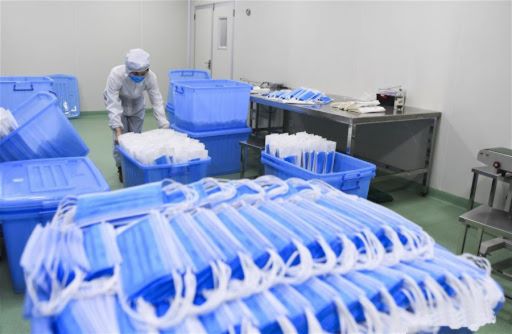
COVID-19 Surgical MASK FULL AUTOMATION - AUTOMAZIONE MASCHERINE PER VIRUS

Con riferimento anche al precedente post per l'automazione del processo di realizzazione e  packaging delle mascherine fino al loro inscatolamento la linea di robotizzazioni SISCODATA per la lotta al CORONA VIRUS è stata ampliata e perfezionata .Ad oggi perciò Siscodata e' in grado di fornire 2 differenti tipi di soluzioni robotiche  per i costruttori di mascherine chirurgiche .La prima soluzione prevede la diretta connessione delle macchine di cucitura ed applicazione degli elastici per le orecchie alla linea di  imballo della singola mascherina con relative istruzioni/cartoncino ed alla sua successiva introduzione dopo conteggio nella scatola FEFCO 0406 formata da foglio pianodi cartone Kraft o micronda fustellato .  .


La seconda soluzione risulta valida specialmente per i produttori di grosse dimensione e con grossi valori numerici. prevede che le masckherine siano prodotte in un apposito settore separato che va a caricare un magazzino temporaneo  di cartucce che invece dei cestoni attuali mantengono le mascherine in posizione ordinata il robot poi le preleva ad alta velocita' e le deposita sul nastro a facchineti della flowpack 


With reference also to the previous post on the automation process of realization and packaging of the surgcal mask up to their boxing, the line of SISCODATA robotization for the fight against CORONA VIRUS has been expanded and perfected. So far Siscodata is able to provide 2 different types of robotic solutions for manufacturers of surgical masks. The first solution foresees the direct connection of the sewing machines and the application of ear elastics to the packaging line of the single mask with relative instructions/carton and its subsequent introduction after counting in the FEFCO 0406 box made of flat Kraft cardboard or micronda die-cut sheet.  .


The second solution is especially valid for large producers with large numerical values. it provides that The second solution is especially valid for large manufacturers with large numerical values. It foresees that the masks are produced in a separate area that is used also to load a temporary stock of cartridges that instead of the current randomly filled baskets keep the masks in an orderly position.The robot do not need so of sophist
icated vision systems and runs at highest speed .
For more details on the fullautomatic system from manufacuturing upto box closed ask to info@siscodata.com or call dr.ssa Laura Cattaneo or Mr. Brambilla at + 39.0332.472.471

Killing UV Mobile Robot far superior than humans In cleaning rooms by COVID-19-Killer UV Mobile Robot UV di gran lunga superiore ad un umano nella pulizia delle stanze da COVID-19

Bacteria-Killing UV Mobile robot is far superior than humans 
in cleaning  rooms by COVID-19
The UV 19 Killer compact  beam device employs UV-C LEDs to kill pathogens.
Bacteria, viruses and spores all have a unique sensitivity to various ultraviolet (UV) wavelengths and exposure times – two specifications that can be discovered with the UV 19 Killer.
The small size and ease of use of the UV 19 Killer allows the realisation of a table-top homogenised UV delivery system, which can be operated virtually anywhere in a laboratory or out in the field. Unlike mercury-lamp systems, the UV 19 Killer features a narrow band emission and is available with single, double or triple wavelengths ranging from 255nm to 365nm. The unit can also be fully customised to fit a specific need.
The system consists of a UV C LED module, a controller, and a collimating tube. The beam radiates a testing area of 45.6cm2 with a Petri Dish Factor >0.9, providing a homogeneous intensity distribution that is key for accurate dosimetry testing.
LEDs require no warm-up time, and can endure an infinite number of on/off cycles, and reach their full intensity in less than 10ns, which means the UV 19 Killer essentially has an instantaneous shutter speed.
Thanks to the AGV 1500 Comau used, it is possible to "train" the unit in a simple way "follow me" memorizing  the daily path  that will then be performed at night in the offices or in the plant building or in the hotel aisle   in the most appropriate hours and less frequented by people .The path can so be optimized to have the maximum efficiency in killing virus.​.
The agv can run and use a technique of lurking to tow the lamp along the programmed path and irroring all the trip of UV-C and later docking the lamp tower in a special plug to let it working for sterylizing meanwhile the AGV goes to move another tower on wheels inanother location so ,optimizing the paths.
Killer UV Mobile Robot UV di gran lunga superiore ad un umano nella  pulizia delle stanze da COVID-19

Il dispositivo a fasci di raggi ultravioletti mobile UV 19 Mobile Killer utilizza LED UV-C per uccidere gli agenti patogeni.
Batteri, virus e spore hanno tutti una sensibilità unica alle varie lunghezze d'onda ultraviolette (UV) e ai tempi di esposizione - due specifiche che possono essere scoperte con l'UV 19 Killer.
Le dimensioni ridotte e la facilità d'uso dell'UV 19 Killer consentono di realizzare un sistema di erogazione UV omogeneizzato , che può essere utilizzato praticamente ovunque in laboratorio o sul campo. A differenza dei sistemi con lampada al mercurio, l'UV 19 Killer è caratterizzato da un'emissione a banda stretta ed è disponibile con lunghezze d'onda singole, doppie o triple che vanno da 255nm a 365nm. L'unità può anche essere completamente personalizzata per soddisfare una specifica esigenza.
Il sistema è composto da un modulo LED UV C, un controller . Il fascio irradia un'area di prova di 45,6  cm2 con un fattore di piatto di Petri >0,9, fornendo una distribuzione omogenea dell'intensità che è la chiave per un test dosimetrico accurato. 
I LED non richiedono alcun tempo di riscaldamento e possono sopportare un numero infinito di cicli di accensione/spegnimento (cosa che una lampada tradizionale a vapori non  e raggiungere la loro piena intensità in meno di 10ns, il che significa che l'UV 19 Killer ha essenzialmente una velocità  istantanea come qualsiasi LED.
Grazie all'AGV 1500 Comau utilizzato, è possibile "addestrare" l'unità in modo semplice "seguimi" memorizzando il percorso giornaliero che verrà poi effettuato di notte negli uffici o nell'edificio dell'impianto o nel corridoio dell'albergo nelle ore più opportune e meno frequentate dalle persone; il percorso può essere così ottimizzato per avere la massima efficienza nell'abbattimento dei virus.
L'agv può correre e utilizzare una tecnica di aggancio per trainare la lampada lungo il percorso programmato e irritare tutto il viaggio di UV-C e successivamente agganciare la torre della lampada in una spina speciale per farla funzionare per la sterilizzazione mentre l'AGV va a spostare un'altra torre su ruote in un'altra posizione così, ottimizzando i percorsi.


 For more info write mail to info@siscodata.com or call +39.0332.472471 asking of Dr.Laura Cattaneo or Mr.Brambilla